Biminis and tops
Frames bent and welded in house, canvas cut to the frame rather than to a pattern that nearly fits. Boots and covers included, not extra.
What we make
Frames bent and welded in house, canvas cut to the frame rather than to a pattern that nearly fits. Boots and covers included, not extra.
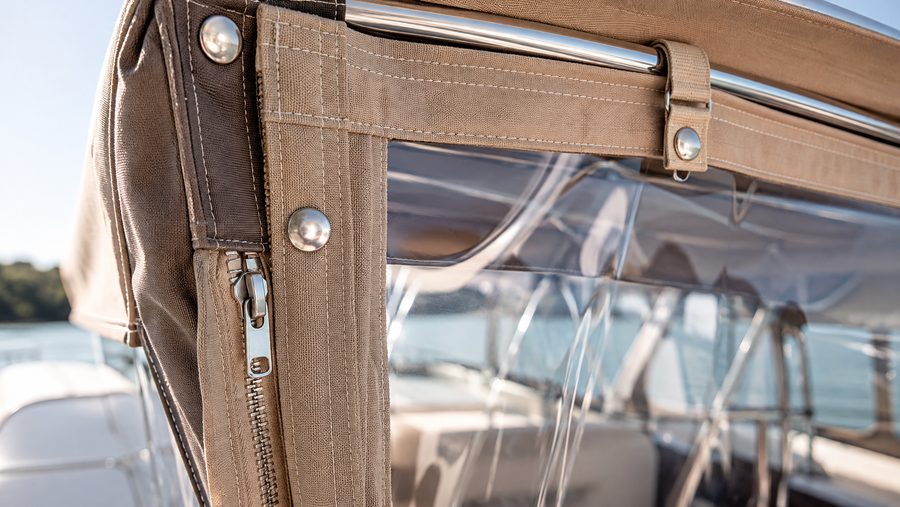
Front, side and aft curtains in clear vinyl or the newer rigid glazing, zipped and fastened so a single person can drop them in weather.
Snap, shock cord or track fastened, vented, and shaped to shed water instead of pooling it in the middle where the fabric eventually gives up.
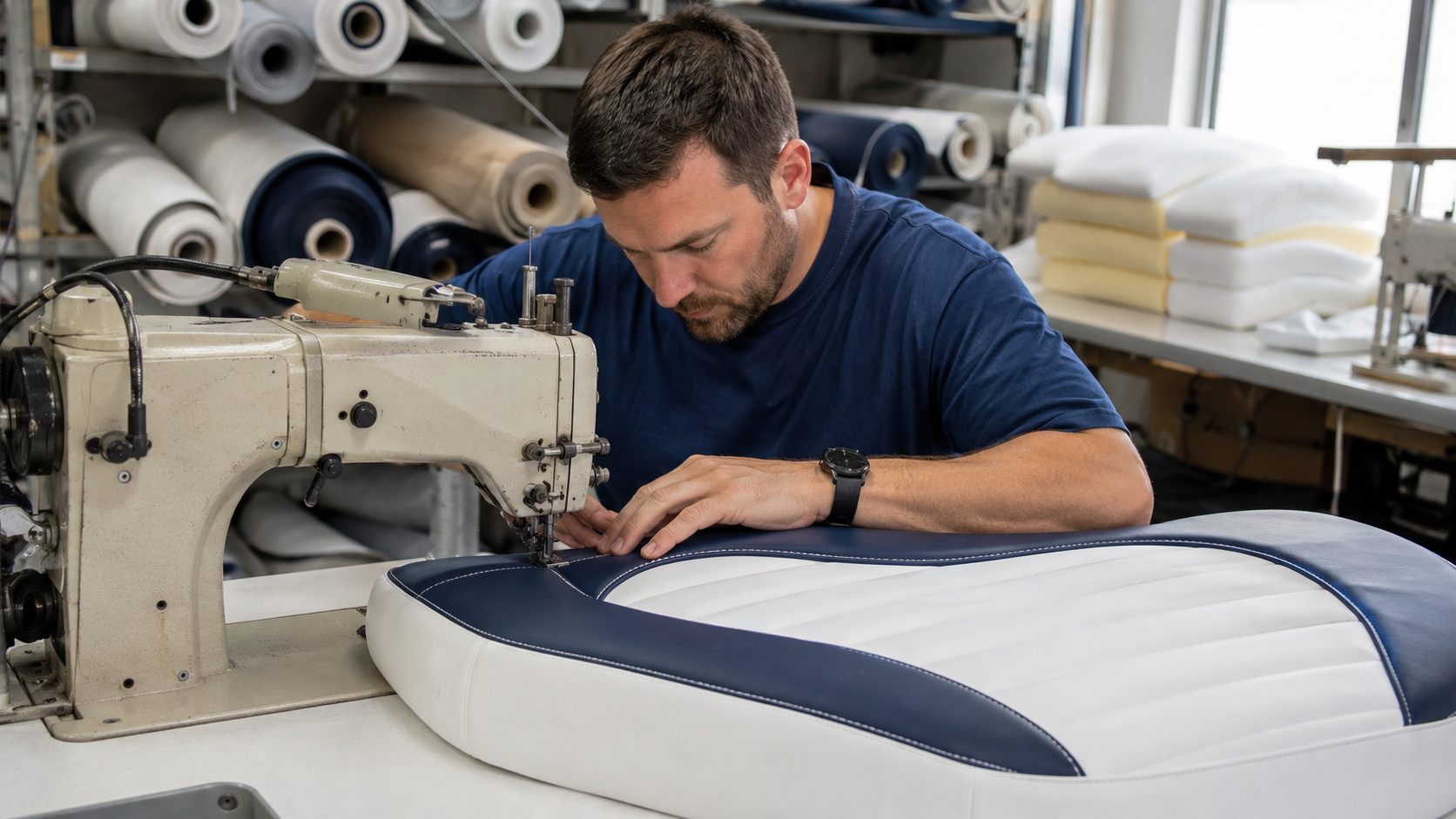
Rebuilt or built new. Foam specified for the seat, not for the invoice, and closed-cell everywhere water can reach.
Radiused, piped and double-stitched where the seams take load. This is where an upholstery shop's real level shows.
Headliners rebuilt on new board, marine carpet, and closed-cell foam decking cut on a table rather than trimmed in place.
Materials
Solution dyed, breathable, the standard for tops and covers. Colour goes through the fibre rather than sitting on it.
Waterproof rather than water resistant. Heavier, and the right answer for mooring covers that live outside all season.
Enclosure glazing. Rolls for storage, scratches if you clean it wrong, and lasts years if you do not.
Panels that stay optically flat and do not craze. More money up front and no comparison from the helm at speed.
Upholstery skins, UV and mildew treated. Perforated where a seat needs to breathe.
For anything that will get wet. Open-cell belongs in a cabin, and nowhere else on a boat.
Enclosures
Anybody can sew a curtain. What separates an enclosure you use from one you leave rolled up is whether a single person can drop it in a squall without fighting it, and that comes down to zipper direction, fastener spacing and where the reinforcement went.
We build them so the boat can be closed up by whoever happens to be aboard, which is usually not the person who commissioned it.
Talk it throughCare
Fresh water and a soft brush. Pressure washers drive water through the coating and take the finish with it.
Grit plus a dry cloth equals permanent scratches. Flood it first, then wipe in one direction with a clean microfibre.
A fold becomes a crease and a crease becomes a crack. Roll it with the curve and store it flat.
Mildew does not eat acrylic, but it will happily live on whatever is on top of it, and the stain outlasts the smell.