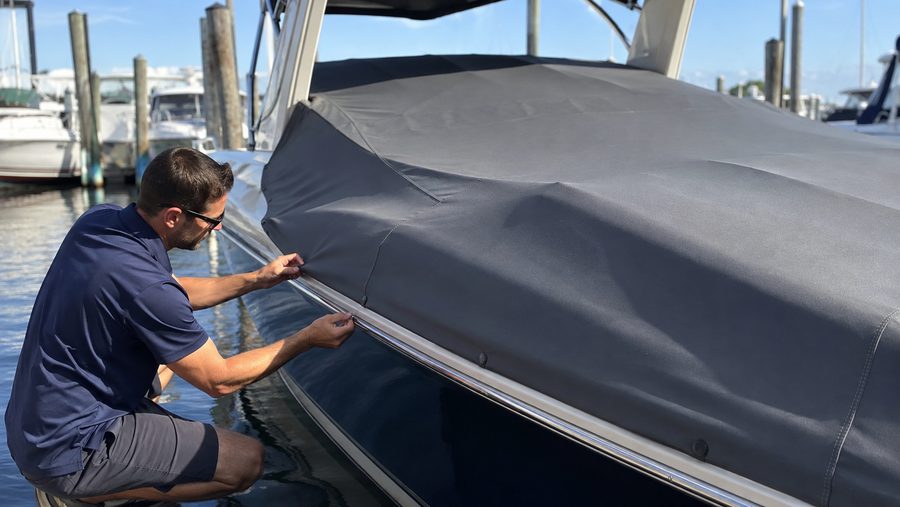
Biminis and tops
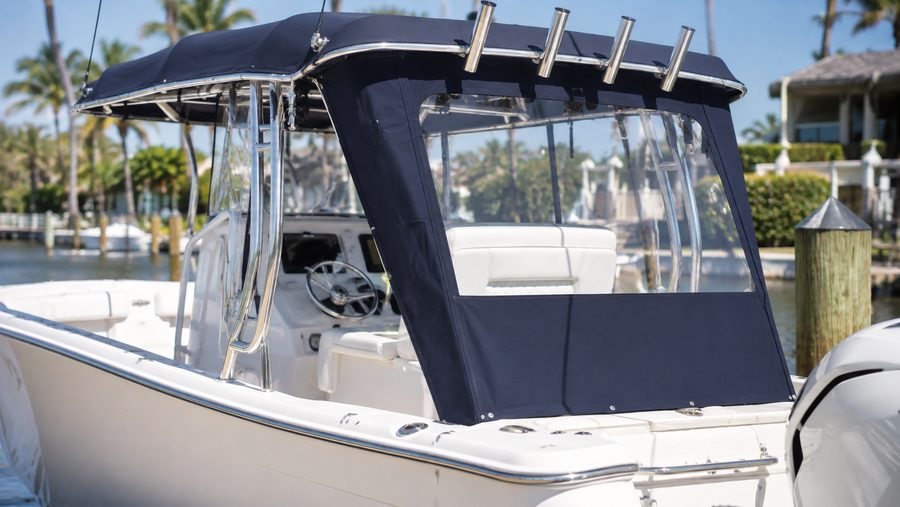
Frames bent and welded in house, canvas cut to the frame rather than to a pattern that nearly fits. Boots and covers included, not extra.
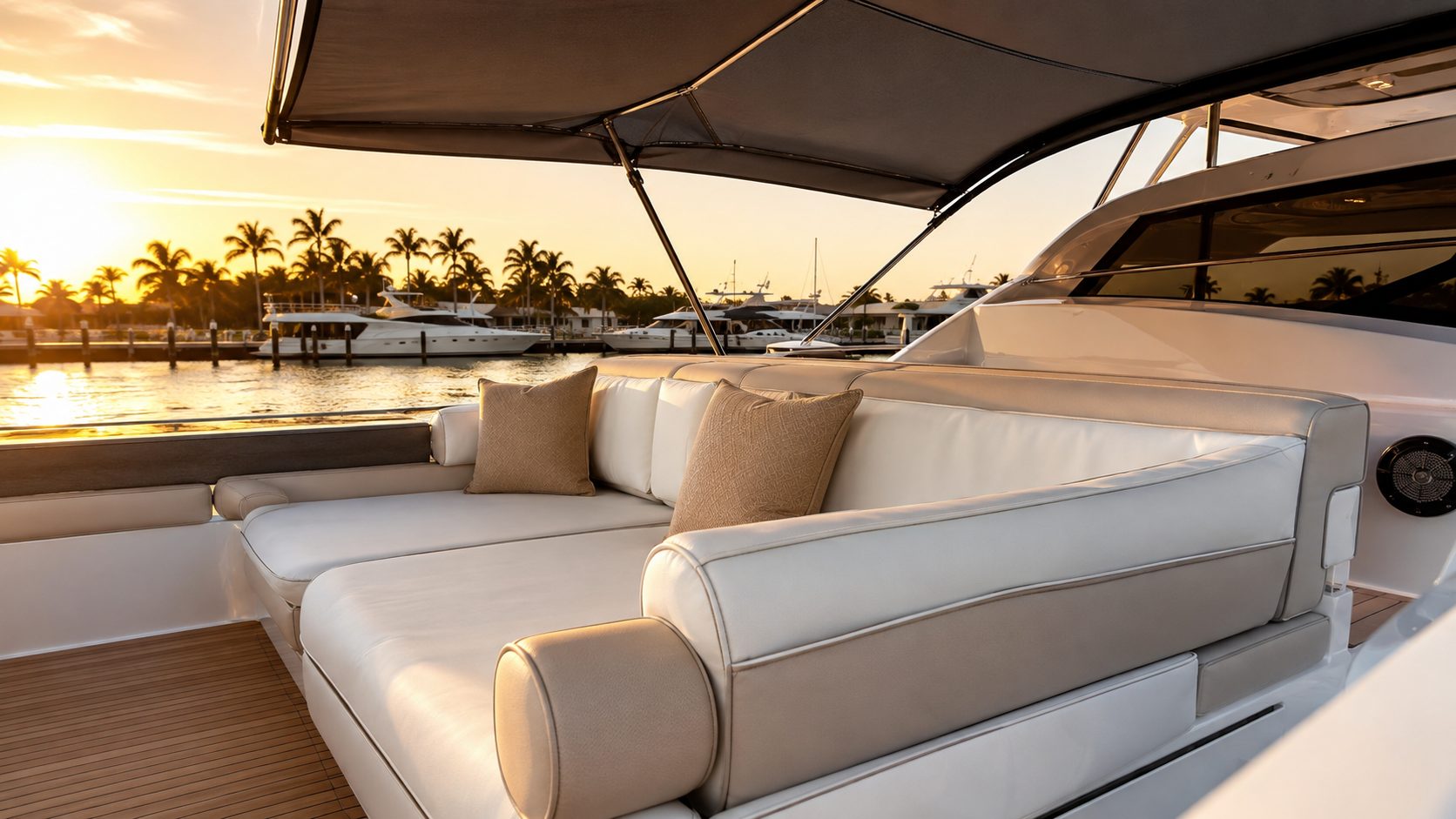
Marine canvas and upholstery / Southwest Florida
Which is why we measure aboard, draft every panel for your approval, and fit on the water. A cover cut to a pattern that nearly fits is a cover you will be unhappy with for the next eight years.
The shop
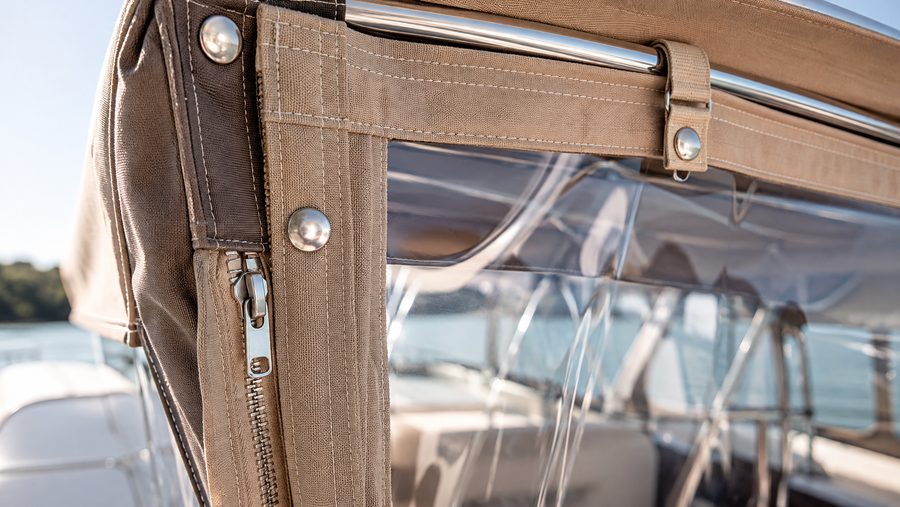
Not the fabric. Almost every cover we replace has years left in the acrylic and seams that have simply come undone, because it was sewn with thread that was never going to survive this much ultraviolet.
That is the whole trade in one sentence. The visible part is choosing a colour. The part that decides whether you are back here in three years is the thread, the seam allowance, where the reinforcement goes, and whether the panels were cut to this boat.
What we make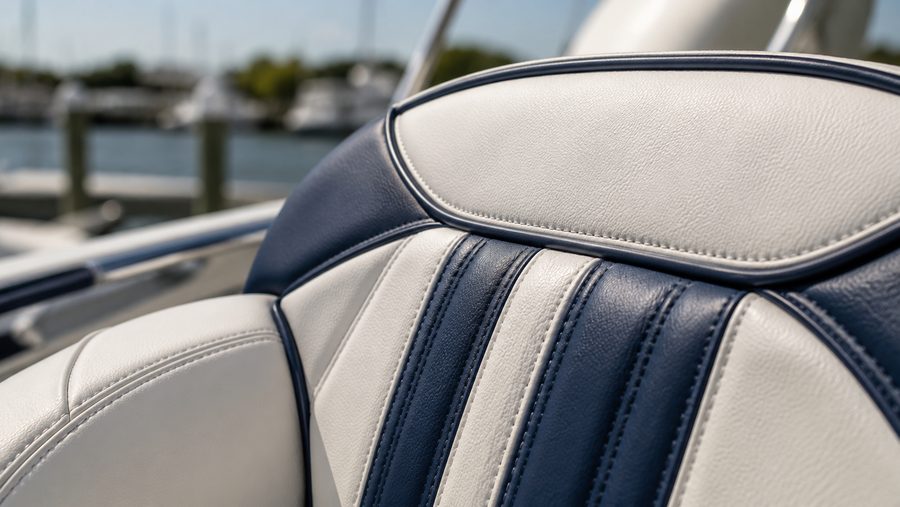
The swatch wall
Six of the colourways we specify most. Every tile here is the same woven acrylic photographed in the same light, so what changes between them is only the colour.

The default for a reason. Hides salt spray, holds colour under Gulf sun, and sits correctly against almost every hull that has ever been sold down here.
Usually specified forBiminis, enclosures, mooring covers

Reads modern on a white hull and runs noticeably cooler underneath than navy, which matters more than people expect on an August afternoon.
Usually specified forHardtop tops, full covers

Warm without going orange. Pairs with teak and with the cream vinyl most interiors are already wearing.
Usually specified forCockpit covers, sunpads, valances

Bold, and honest about it. Fades faster than the neutrals in direct sun, so we recommend it where the cover comes off between trips.
Usually specified forAccent panels, piping, trailerable covers

Quiet on a dark hull and forgiving of the green tint that canal water leaves on everything eventually.
Usually specified forBiminis, console covers

The lightest we will fit without a liner. Beautiful, and it will show every mark, which is a fair trade on a boat that lives under cover.
Usually specified forInteriors, headliners, bimini liners
Screens lie about colour. Before anything is cut we will put physical swatches in your hand, on your boat, in daylight.
What we make
Frames bent and welded in house, canvas cut to the frame rather than to a pattern that nearly fits. Boots and covers included, not extra.
Front, side and aft curtains in clear vinyl or the newer rigid glazing, zipped and fastened so a single person can drop them in weather.
Snap, shock cord or track fastened, vented, and shaped to shed water instead of pooling it in the middle where the fabric eventually gives up.
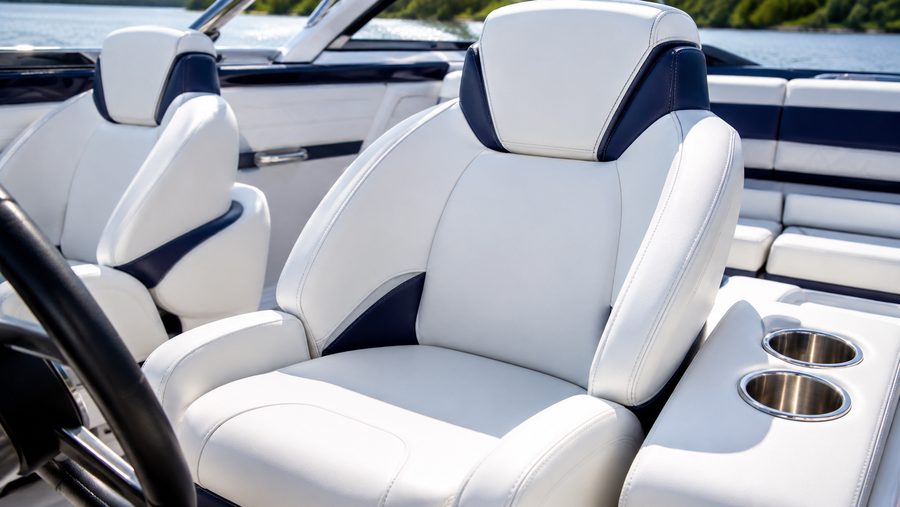
Rebuilt or built new. Foam specified for the seat, not for the invoice, and closed-cell everywhere water can reach.
Radiused, piped and double-stitched where the seams take load. This is where an upholstery shop's real level shows.
Headliners rebuilt on new board, marine carpet, and closed-cell foam decking cut on a table rather than trimmed in place.
How it goes
We come to the vessel. Nothing about a boat is square, and a canvas shop that patterns from a drawing is a canvas shop that fits twice.
Traditional patterning where it belongs, digital measurement where the tolerances are tighter than a pattern can hold.
The layout goes into CAD, panel by panel. You see window sizes, zipper runs and seam placement before anything is cut.
Cut from the approved draft, sewn with UV-stable thread, because thread is what fails first on a cover that is otherwise perfectly good.
Fitted on the water, adjusted on the spot, and you keep the old canvas until the new one is right.
We do not quote a turnaround at enquiry. Season, fabric availability and how many boats are ahead of yours all move it, and a number invented to win the job helps nobody. You get a real schedule when we book.
Portfolio
Measures are taken aboard, by appointment, at your dock or ours.